Inventory Management System
A centralized enterprise platform designed to streamline asset tracking and operational workflows. It provides a complete lifecycle view of inventory—from acquisition to allocation—ensuring operational efficiency and accountability.
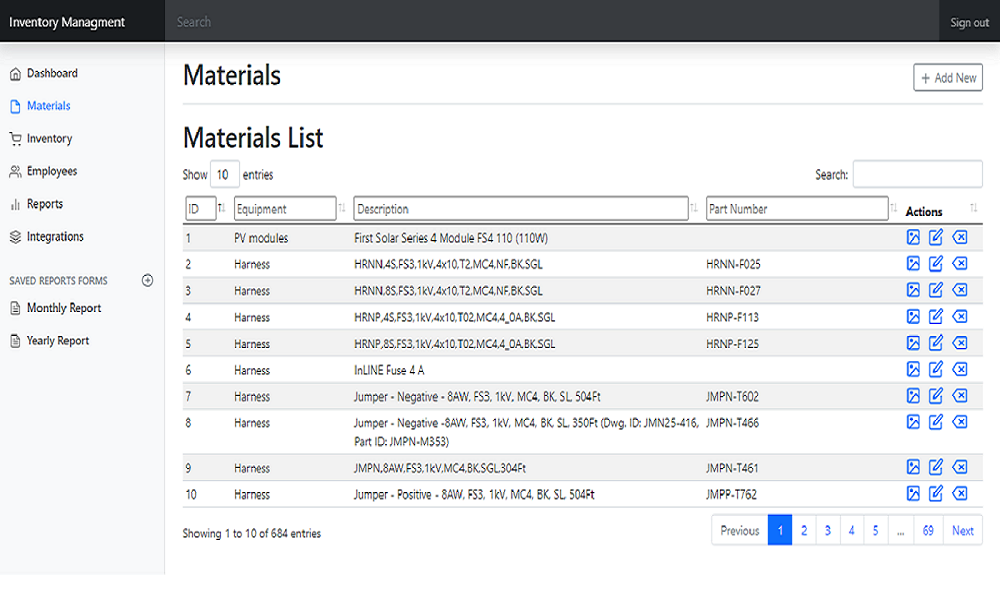
System Modules
Dashboard
The central command center providing an immediate, high-level overview of the entire operation. It visualizes critical Key Performance Indicators (KPIs) such as total asset value, recent transactions, and critical low-stock alerts. This module is designed to give administrators instant insight into system health without needing to dig into granular reports.
Materials
A robust cataloging module that defines the master list of all item types, independent of their current stock quantity. Users can define detailed specifications, part numbers, and categories for every item type (SKUs). This ensures data consistency across the organization by creating a standardized dictionary of all assets and consumables used in operations.
Inventory
The core engine for tracking actual stock levels. This module handles the day-to-day operations of adding stock (In), removing stock (Out), and adjusting quantities. It features advanced filtering and searching (via DataTables) to locate specific batches or serial numbers instantly, maintaining a real-time ledger of what is physically available in the warehouse.
Employees
A dedicated personnel management system that links inventory to individuals. This module allows administrators to assign custody of high-value assets (tools, devices) to specific employees. It creates an accountability trail, tracking exactly who has checked out an item, when it was assigned, and ensuring items are returned upon project completion.
Reports
An automated business intelligence engine capable of generating detailed snapshots of system activity. It includes pre-configured templates for "Monthly" and "Yearly" reports, aggregating data on consumption, costs, and inventory turnover. These reports are exportable (PDF/Excel) and serve as essential documentation for financial audits and strategic planning.
Integrations
The connectivity layer designed for scalability. This module facilitates communication with external systems, third-party APIs, or legacy databases. Whether exporting data for accounting software or importing bulk data from suppliers, the Integrations module ensures the inventory system can act as a connected component within a larger enterprise ecosystem.